

Fat Loss Training Using Resting Heart Rate, HRV, and Sleep

What you’re trying to achieve with HRV, resting heart rate, and sleep
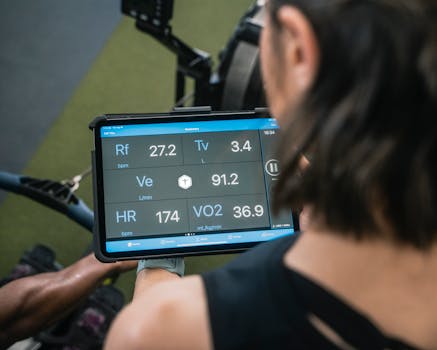
Fat loss training works best when your intensity matches your recovery. If you push hard while you’re under-recovered, performance drops, sleep quality worsens, and you’re more likely to miss sessions—reducing overall training quality. If you back off appropriately, you can keep training consistent, maintain higher-quality work, and support the calorie deficit through improved adherence.
This guide shows a practical method for using three recovery signals—resting heart rate (RHR), heart rate variability (HRV), and sleep—to decide what kind of training to do each day. You’ll learn how to interpret trends, set actionable thresholds, and use a simple progression so your “fat loss training using resting heart rate HRV sleep” becomes a repeatable system rather than guesswork.
Required preparation: measurements, baseline, and setup
Before you change training based on RHR, HRV, and sleep, you need consistent data and a baseline. Most people make better decisions when they treat these metrics as trends over time rather than single-day numbers.
1) Pick one wearable system and keep it consistent. Use the same device and wrist/strap position. Switching devices can change the scale and interpretation.
2) Track daily for at least 14 days. Aim for a minimum of two full weeks to understand your normal range. If you already track, use your existing trend history.
3) Record key variables.
- Resting heart rate (RHR) each morning
- HRV (often RMSSD or similar) each morning
- Sleep duration and sleep score (or at least bedtime/wake time and perceived sleep quality)
- Training session completed (yes/no) and session type (strength, intervals, zone 2, easy day)
4) Decide your training “menu.” You’ll need a few session types you can swap in based on recovery. For fat loss, a common menu includes:
- Easy aerobic (zone 2) sessions
- Moderate aerobic (tempo or longer steady work)
- High-intensity intervals (short, hard efforts)
- Strength training (moderate loading, controlled fatigue)
- Optional rest or very light movement on low-recovery days
5) Use a consistent warm-up. Your readiness decisions will work better if your warm-up is standardized. For example: 8–12 minutes easy cardio, then 2–3 progressive ramps specific to the session.
Step-by-step: build your recovery-guided fat loss training plan
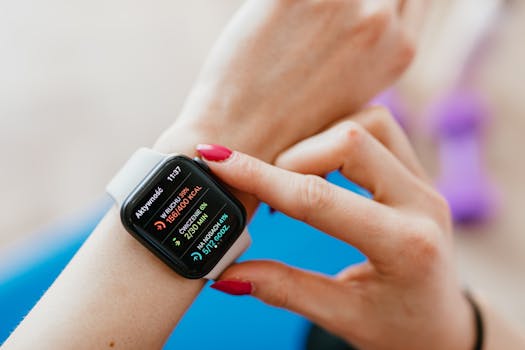
Use the steps below to translate RHR, HRV, and sleep into daily decisions. The goal isn’t to avoid training—it’s to match training stress to recovery capacity.
Step 1: Establish your baseline ranges
After 14 days, calculate your typical morning values. You can do this manually or with your app’s “average over time” feature.
- RHR baseline: note your typical RHR and the normal day-to-day variation.
- HRV baseline: note your typical HRV and the usual fluctuations.
- Sleep baseline: track typical sleep duration and whether your sleep score is usually stable or variable.
Look for patterns. Many athletes have a stable RHR but HRV swings more. Some people see the opposite. Your thresholds should reflect your own normal.
Step 2: Create simple “readiness categories” for training
Instead of trying to interpret every number, use categories based on how far you are from your baseline and how many days the pattern has persisted. Here’s a practical framework you can adapt:
- Green (ready to push): HRV is at or above your baseline, RHR is at or below baseline, and sleep was adequate (duration and/or sleep score not notably worse).
- Yellow (moderate recovery): HRV is slightly below baseline or RHR is slightly above baseline, or sleep was shorter/worse than usual.
- Red (low recovery): HRV is clearly below baseline for you, RHR is elevated for more than one morning, and sleep was notably poor (short or fragmented) or you feel unusually heavy.
If you want a more numeric approach, use relative deviation from your baseline rather than a universal HRV number. For example, treat “red” as HRV dropping meaningfully below your personal norm and RHR rising meaningfully above your norm for 2+ days.
Step 3: Assign a training type to each category
Now match training intensity to readiness. This is where fat loss training using resting heart rate HRV sleep becomes actionable.
- Green day training: schedule your highest-quality work. This is when intervals, heavier strength, or a harder tempo session fits best.
- Yellow day training: keep volume or intensity moderate. Choose zone 2, reduce interval sets, or use lighter strength loads while maintaining movement quality.
- Red day training: switch to recovery-focused movement. Choose easy zone 2, a short mobility routine, or full rest. If you do train, keep it low intensity and short.
Example weekly structure: If you normally do 2 interval sessions and 2 strength sessions weekly, you might keep strength on green/yellow days and move intervals to green days only. On red days, you swap intervals for easy aerobic or rest.
Step 4: Use a “two-day rule” for decisions
Single-day readings can be noisy. Use a two-day approach to avoid overreacting to one odd morning.
- If today is yellow but yesterday was green, you can often proceed with a moderated session.
- If today is red and yesterday was also yellow or red, treat it as a true recovery signal and reduce intensity or rest.
- If HRV drops sharply but RHR hasn’t risen yet, watch how the trend evolves over the next 24–48 hours before forcing high-intensity work.
This keeps your plan stable while still responding to real fatigue.
Step 5: Adjust session parameters, not just “yes/no” training
When readiness is yellow, you don’t necessarily need to cancel everything. Adjust session parameters so you still accumulate training stimulus while protecting recovery.
Use these practical levers:
- Intervals: reduce total work (fewer reps), shorten duration targets, or keep intensity slightly lower while maintaining good form.
- Tempo/moderate cardio: reduce total time or keep the effort in a sustainable range.
- Strength: reduce load by a small amount, limit sets near failure, and focus on controlled reps and full range of motion.
- Zone 2: keep it easy and consistent. Zone 2 is often the best “default” on yellow/red days.
Practical example: On a green day, you might do 6–8 interval repetitions. On a yellow day, you might do 4–5 reps at the same target intensity but stop earlier if HRV remains suppressed or RHR stays high. On a red day, you skip intervals entirely and do 25–40 minutes easy aerobic.
Step 6: Tie sleep into the same decision system
Sleep is not only a metric—it’s a training input. Use it to refine your readiness category.
When sleep is consistently shorter than your baseline, expect HRV to drift lower and RHR to drift higher over time. In that case, you should reduce training stress for multiple days, not just one.
Use this rule of thumb:
- Short sleep (1 night): treat as yellow and reduce intensity slightly.
- Short sleep (2+ nights) or low sleep quality: treat as red until sleep improves.
Step 7: Track outcomes and refine thresholds every 2–4 weeks
After you’ve run the system for 2–4 weeks, review:
- Did you complete more planned sessions?
- Are your “red days” leading to actual recovery (HRV starts rising again, RHR normalizes)?
- Are your best workouts happening on green days?
- Is your performance stable (or improving) in intervals/strength when you’re well recovered?
Adjust your categories if you notice patterns like:
- You’re too conservative (too many red/yellow days with undertraining).
- You’re not conservative enough (frequent poor sessions or lingering fatigue).
Common mistakes that derail recovery-based fat loss training
Even with good intentions, people often misuse RHR, HRV, and sleep. Avoid these errors to keep your plan effective.
1) Overreacting to one morning reading
HRV can vary due to stress, travel, alcohol, hydration, illness, and even timing of measurement. A single low HRV day isn’t always a reason to cancel everything—look at the trend and the two-day rule.
2) Ignoring the difference between fatigue and illness
If you have symptoms (fever, sore throat, unusual body aches, persistent GI upset), don’t try to “train through” red signals. Reduce training intensity and prioritize recovery. If symptoms are significant, rest fully.
3) Confusing low HRV with “danger” every time
Low HRV can happen after a hard session, poor sleep, or mental stress. The key is whether the signal improves with rest and whether your training performance matches your recovery status.
4) Using the same thresholds for everyone
HRV is highly individual. Two people can have the same HRV number but very different baseline norms. Always interpret HRV relative to your own baseline.
5) Making training decisions based only on one metric
RHR, HRV, and sleep each provide different information. A low HRV with normal sleep might indicate temporary stress; elevated RHR plus poor sleep usually indicates deeper fatigue. Combine them.
6) Cutting all volume on red days
Complete inactivity can increase stiffness and reduce daily movement. On red days, aim for low-intensity movement (easy zone 2, walking, mobility) rather than total shutdown—unless you feel sick or exhausted.
Additional practical tips to optimize fat loss and recovery
Use these strategies to improve consistency and make your recovery signals more reliable.
Make measurement conditions consistent
RHR and HRV readings can shift if you measure at different times, after caffeine, or after a late night. Try to measure under similar conditions—often within a consistent window after waking.
Use a simple “readiness journal” alongside numbers
Write down one sentence each day: energy level, soreness, motivation, and any unusual stressors. Over time, you’ll learn how your subjective feel aligns with HRV/RHR/sleep. This helps you fine-tune decisions without relying on numbers alone.
Prioritize sleep behaviors that improve HRV
You don’t need perfection, but small improvements compound. Focus on:
- Consistent wake time
- Reducing late caffeine
- Keeping the evening routine stable
- Limiting alcohol when you’re trying to train hard
When sleep quality improves, HRV often follows within days, and your training tolerance increases.
Keep strength training technically clean
Strength is valuable for fat loss because it preserves muscle during a calorie deficit. When recovery is yellow/red, reduce fatigue rather than quality. Use controlled reps, stable ranges of motion, and stop sets with a safe buffer.
Use zone 2 as your recovery workhorse
On yellow/red days, zone 2 can maintain aerobic development without stacking too much stress. It also supports daily calorie burn and movement habits. Keep it truly easy enough that you can breathe steadily and maintain good form.
Plan a deload week when trends stay red
If your HRV remains suppressed and RHR stays elevated for multiple days across the week, consider a scheduled reduction in training stress. This is different from reacting to one day—it’s a proactive reset.
Use relevant products carefully and consistently
Wearables can support this process, especially if they provide RHR, HRV, and sleep breakdown. When using a device such as a Garmin watch with HRV metrics or an Apple Watch-style sleep tracking workflow, focus on consistency: measure at the same time, use the same placement, and rely on trends. The metric interpretation matters less than whether the system gives you stable, repeatable signals.
Also, if you use a chest strap for training heart rate accuracy, keep it for training intensity tracking—not for morning recovery unless your routine supports consistent HRV measurement. Many chest straps are better for performance HR than for daily HRV baselines.
Fuel and hydration matter for recovery metrics
Hydration and carbohydrate availability can influence resting heart rate and perceived recovery. If you’re dieting aggressively, recovery signals may worsen. Don’t change everything at once, but ensure you’re not combining low calories with insufficient fluids and inconsistent sleep.
Putting it all together: a simple example week

Here’s a realistic example of how you might apply the system without turning it into a complicated spreadsheet.
- Monday (Green): HRV at/above baseline, RHR normal or low, sleep good. Do interval session + short strength warm-up work.
- Tuesday (Yellow): HRV slightly down and sleep shorter. Do zone 2 for 35–50 minutes and a lighter strength session (fewer sets, no near-failure).
- Wednesday (Green): Recovery improved. Do strength session at planned loads and moderate tempo cardio if desired.
- Thursday (Red): HRV suppressed, RHR elevated for 2 mornings, sleep poor. Skip intervals; do easy aerobic or a long walk plus mobility.
- Friday (Yellow): Sleep improved but HRV still not fully back. Keep cardio steady and reduce intensity in any hard work.
- Saturday (Green if improved): If readiness is green, complete your hardest session of the week. If not, choose steady aerobic.
- Sunday (Recovery focus): Prioritize sleep timing and low-stress movement. Let readiness data guide whether you add light strength or full rest.
Over time, this approach helps you spend more of your training time in the zone where you can actually perform—supporting the calorie deficit through consistency rather than burnout.
01.12.2025. 22:40