

Red Light vs Infrared Light for Skin: Differences That Matter

What you’re really choosing: wavelength, depth, and skin goals
When people compare red light vs infrared light for skin, they’re usually comparing two different parts of the light spectrum. The labels sound similar, but the wavelengths behave differently in your skin and can lead to different outcomes.
Red light generally refers to wavelengths around 620–700 nm. Infrared light usually means longer wavelengths, often split into near-infrared (NIR) ~700–900 nm and longer infrared (900 nm and beyond) depending on the device. In practical terms, shorter wavelengths tend to be absorbed more superficially, while longer wavelengths can penetrate deeper.
Most at-home devices use LEDs or laser arrays, with specific irradiance (power delivered per area) and a recommended treatment time. Your results depend on both the type of light and the dose—how long you use it and how strong the device output is.
Quick takeaway: If your goal is surface-level skin benefits, red light often aligns better. If your goal includes deeper tissue effects, near-infrared can be more relevant. But neither is universally “better” for every skin concern.
Quick summary: the strongest overall option for most skin goals
For most people using light therapy for common skin goals—such as improving the look of fine lines, supporting overall skin tone, and calming visible irritation—red light (around 630–660 nm) is often the most straightforward, consistent choice. It tends to target superficial layers with a well-established safety profile and typically fits the treatment schedules people can realistically follow.
If you’re specifically aiming for effects that may involve deeper dermal layers—like redness patterns linked to inflammation cycles, or you’re using a protocol designed around NIR—adding near-infrared (around 800–850 nm) can be a more targeted approach than using red alone.
Side-by-side: red light vs infrared light for skin
The table below compares how these wavelengths typically behave, what they’re commonly used for, and how you might notice differences in real-world use. Individual devices vary, so treat this as a wavelength-based guide rather than a guarantee.
| Feature | Red light (approx. 620–700 nm) | Infrared light (approx. 700–900+ nm) |
|---|---|---|
| Typical penetration depth | More superficial; emphasizes epidermis and upper dermis | Often deeper; emphasizes dermis and potentially deeper tissues |
| Common biological focus | Cell signaling and energy support in surface/upper dermal layers | Deeper cellular signaling; may influence deeper inflammation and tissue response |
| Skin concerns most often targeted | Photorejuvenation, fine lines, overall texture, mild redness support | Deeper dermal support, post-inflammatory recovery patterns, broader tissue effects |
| Expected “feel” during use | Usually no heat sensation beyond gentle warmth (if any) | May feel slightly warmer, especially with higher power or longer wavelengths |
| Typical treatment timing in protocols | Often 5–20 minutes per session depending on irradiance | Often 5–20 minutes as well; some protocols use longer sessions for comfort and dose |
| Onset of visible changes | Often 2–8 weeks for noticeable improvements in tone/texture | Often 4–10 weeks for deeper or more systemic-looking changes |
| Best pairing with skin routines | Works well alongside gentle skincare; minimal interference with actives | Also compatible, but consider avoiding overlapping heat-heavy steps the same day |
| Device examples you’ll see in the market | 630 nm, 633 nm, 640 nm, 660 nm LED panels/handhelds | 810 nm, 830 nm, 850 nm NIR devices; some combine red + NIR |
Real-world performance differences: what you might notice
In real use, the biggest differences aren’t always dramatic day-to-day changes. Instead, they show up as how quickly your skin looks calmer versus how gradually texture or deeper redness patterns shift.
Scenario 1: You’re targeting surface texture and post-acne marks. If you’re using light therapy to improve the look of uneven texture and help fade discoloration over time, red light is often a better match. Many people notice a more even-looking surface within 2–6 weeks, especially when they’re consistent (for example, 3–5 sessions per week).
Scenario 2: You’re focusing on a “deeper” inflammation pattern. Say you have a skin pattern where redness seems to linger longer after flare-ups, or you’re trying to support recovery after irritation. Near-infrared may fit better because it can reach deeper layers more effectively. In practice, improvements may be slower—think 4–10 weeks—but the visible calming effect can look more “stable” for some people.
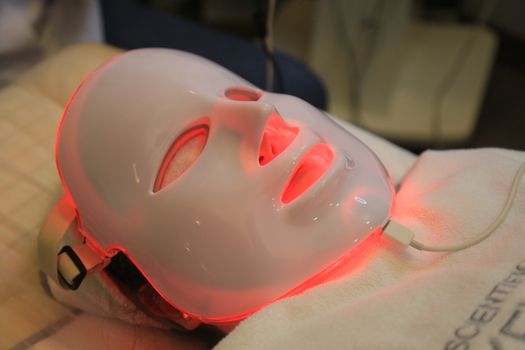
Scenario 3: You’re using an LED mask that includes both. Many modern masks combine red (e.g., 630–660 nm) and NIR (e.g., 810–850 nm). In these cases, you may get a blend: red for surface tone and texture support, and NIR for deeper tissue signaling. People often report that this style of protocol feels more comprehensive than using a single wavelength alone.
One practical note: the device’s irradiance and the dose matter as much as wavelength. A low-power infrared unit used too briefly may underperform a higher-power red device used consistently.
Pros and cons breakdown: red light vs infrared light
Red light: strengths and limitations
Pros
- More targeted to upper layers: Red wavelengths (roughly 620–700 nm) tend to emphasize the epidermis and upper dermis, which aligns with many common cosmetic skin goals.
- Often easier to build a consistent routine: Many protocols use comfortable session lengths (commonly 5–15 minutes).
- Good fit for daily-life compatibility: Red light is usually less likely to feel intensely warm, which can make it easier to stick with a plan.
- Broad use across skin types: Because it’s generally less associated with heat, it’s commonly used across a wide range of skin concerns.
Cons
- May be less relevant for deeper tissue goals: If your main issue is strongly linked to deeper dermal inflammation or longer recovery patterns, red light alone may not be the most direct match.
- Results depend heavily on dose: A weak device or short session can slow progress even if the wavelength is correct.
- Not a stand-alone fix for every cause: If your redness is driven by triggers like rosacea flares, irritant reactions, or sun exposure, light can support but won’t replace addressing the underlying driver.
Infrared light: strengths and limitations
Pros
- Deeper penetration (especially NIR): Near-infrared (commonly 800–850 nm) can reach deeper than red, which may be advantageous for dermal-level support.
- Potentially stronger match for recovery and tissue response: Infrared protocols are often chosen when someone wants support that feels more “tissue-based” than surface-based.
- Often paired with red for broader coverage: Many reputable systems combine wavelengths so you can address both upper and deeper layers in one session.
Cons
- May feel warmer: Depending on irradiance and wavelength, you might notice more warmth. Comfort matters—if it’s too warm, you may shorten sessions or skip altogether.
- Slower visible changes for some goals: Deeper effects can take longer to show up visually, often 4–10 weeks or more.
- More variability between devices: Infrared products range from near-infrared LEDs to longer infrared systems. Without clear wavelength and irradiance specs, it’s harder to predict outcomes.
- Not ideal if you’re only chasing surface improvements: If your primary goal is texture smoothing or tone evenness, red may deliver a more direct cost-to-benefit ratio.
Best use-case recommendations for different buyers
Use-case recommendations should be grounded in your goal, your tolerance for longer timelines, and how your routine fits into your week. These are practical “if this, then that” scenarios, not rigid rules.
If your priority is overall tone, texture, and fine lines
Red light is usually the most efficient starting point. Many people see improvements in the look of texture and brightness within 2–6 weeks when they use a consistent protocol (often 3–5 times per week).
If you’re already using actives like retinoids or gentle exfoliants, red light is generally easy to integrate because it doesn’t typically introduce a strong heating effect.
If your priority is calming longer-lasting redness or supporting recovery
Near-infrared may be the better single-wavelength match, especially if your redness tends to linger after irritation and you’re focusing on recovery cycles. Consider looking for devices that clearly state NIR wavelengths such as 810 nm or 850 nm.
Because results can be slower, give infrared a longer window—often 6–10 weeks—before deciding whether it’s a good fit.
If you want the most balanced approach in one routine
A combined red + NIR device can be a pragmatic choice when you want surface improvements and deeper tissue support. In practice, this can reduce the “either/or” decision because both wavelength ranges are addressed in the same session.
People often prefer this when their goals are broad: for example, they want tone evenness plus support for post-acne recovery and overall skin resilience.
If you’re sensitive to heat or you dislike warming devices
Start with red light or a combined device used at a comfortable distance/settings. Infrared can feel warmer depending on irradiance, so comfort and consistency matter more than theoretical depth.
If you’re comparing masks, panels, and handhelds
Regardless of wavelength, the same principle applies: coverage and dose. A small handheld may work, but if you can’t maintain a consistent session length across the same areas, your real-world dose may vary. Larger panels or masks can help you keep exposure consistent—especially for facial treatment where symmetry matters.
Many common red-light products (like LED masks) specify multiple wavelengths such as 630/660 nm. For infrared, you’ll often see NIR targets around 810–850 nm. If a product lists both, it’s typically designed to cover a broader range of skin depths.
Final verdict: which option suits your needs
Choose red light vs infrared light for skin based on depth of concern, not just label language.
Red light is the clearer winner if you want:
- Surface-level improvements (tone, texture, fine-line appearance)
- A routine that feels comfortable and easy to repeat
- A strong starting point for most skin health goals
Near-infrared (a form of infrared) is the clearer winner if you want:
- More emphasis on deeper dermal response
- Support for longer-lasting recovery patterns
- A slower-burn approach where changes may look more “tissue-stable” over time
Combined red + NIR is often the best fit when you want a single protocol that covers both superficial and deeper layers. In day-to-day terms, it can help you avoid choosing between “quick surface improvements” and “deeper support,” especially if your goals are mixed.
If you’re deciding right now, a good mental model is this: red light tends to be your first move for visible surface benefits, while infrared (especially NIR) can add depth when your goals relate to dermal-level recovery and longer inflammation cycles. The most reliable results still come from consistency and matching your session plan to the device’s stated wavelength and output.
20.04.2026. 10:17