

EMF Exposure: RF vs ELF vs Magnetic Fields Explained

EMF exposure isn’t one thing: RF, ELF, and magnetic fields

“EMF exposure” is often used as a single umbrella term, but the risks and biological effects people worry about depend strongly on the type of field—especially its frequency and how the energy couples to the body. In everyday life, most public attention centers on radiofrequency (RF) energy from wireless technologies, extremely low frequency (ELF) fields from power systems, and static or low-frequency magnetic fields from magnets and certain appliances. Each category behaves differently in air and in tissue, and each has different exposure patterns.
This guide explains EMF exposure RF vs ELF vs magnetic fields in a clear, science-based way. You’ll learn what these fields are, where you encounter them, what current research suggests about health mechanisms, and how to apply practical exposure-reduction strategies that are proportionate and realistic.
What “EMF” means in real-world terms
Electromagnetic fields include electric and magnetic components that vary over time. The “EMF” label covers a wide spectrum of frequencies, from static fields (0 Hz) to extremely high-frequency radiation. The key practical distinction is that different frequencies interact with the human body in different ways.
Two concepts help make sense of EMF exposure:
- Frequency (Hz): How quickly the field changes direction or intensity. RF typically refers to radio frequencies (from kilohertz into gigahertz ranges), while ELF refers to very low frequencies (commonly 50/60 Hz and nearby harmonics).
- Coupling to the body: Whether the energy can be absorbed by tissues or primarily induces currents on the surface and in conductive pathways. RF tends to deposit energy more through absorption mechanisms, while ELF more often relates to induced currents from time-varying magnetic fields.
In practice, “EMF exposure” concerns usually map to RF radiation (wireless), ELF electric/magnetic fields (power and wiring), and static magnetic fields (magnets, some medical devices, and certain industrial equipment).
RF exposure: radiofrequency fields from wireless technologies

RF fields are used for communication and broadcasting. In homes and workplaces, RF sources include mobile networks, Wi-Fi, Bluetooth, cordless phones, and many broadcast systems. RF fields are typically time-varying and can propagate as electromagnetic waves.
Where RF fields come from
Common RF exposure sources include:
- Cell phones and tablets: Highest exposure occurs when a device is close to the body, especially during active transmission.
- Wi-Fi routers: Emissions generally depend on device activity and distance.
- Microwave ovens: Designed to contain RF energy; proper door seals are crucial.
- Wireless access points and smart home hubs: Similar to Wi-Fi, with varying duty cycles.
- Wireless broadcasting and antennas: Exposure levels depend on proximity, orientation, and local regulations.
How RF energy interacts with the body
The best-established RF mechanism is thermal—heating of tissue when sufficient RF power is absorbed. At lower intensities, the focus shifts to whether non-thermal biological effects occur. Research in this area includes studies on cell signaling, oxidative stress markers, and long-term outcomes such as cancer risk. Importantly, results vary by study design, exposure assessment quality, and dose metrics.
In exposure terms, RF concerns are often discussed in relation to:
- Specific absorption (how much energy is taken up by tissue)
- Distance and time (proximity drives exposure strongly)
- Duty cycle (how long the device transmits)
Because RF waves can be absorbed more directly in the body, practical reduction strategies frequently involve reducing close-range exposure and increasing distance.
ELF exposure: extremely low frequency fields from electricity
ELF fields are associated with power generation, transmission, and distribution. In many countries, the dominant frequency is 50 or 60 Hz. ELF exposure in homes often comes from wiring, electrical appliances, and the magnetic fields created by current flowing through conductors.
Where ELF fields come from
Typical ELF sources include:
- Household wiring: Electric and magnetic fields can be present near outlets, panels, and running cables.
- Power cords and adapters: Current flow can create local magnetic fields.
- Transformers and distribution equipment: More relevant near substations and utility infrastructure.
- Large appliances: Refrigerators, HVAC systems, and some motors can contribute depending on operation.
- Electrified rail lines and industrial equipment: Can create stronger ELF exposures in nearby areas.
How ELF fields interact with the body
ELF magnetic fields can induce electrical currents in the body because the field changes over time. The induced currents are typically small, and whether they lead to meaningful biological effects at exposure levels found in everyday settings remains an area of active research.
For ELF, the most common exposure metrics relate to:
- Magnetic field strength (often expressed in microtesla, µT)
- Electric field strength (often volts per meter, V/m)
- Duration of exposure, especially for prolonged time near wiring or appliances
Unlike RF, ELF exposure doesn’t generally involve tissue heating. That’s why discussions often focus on whether induced currents could affect nerve function, cellular processes, or long-term health outcomes. Epidemiological studies have reported mixed findings, and interpreting them is challenging because measuring personal exposure over time is difficult and confounding factors may exist.
Magnetic fields: static vs low-frequency and why “magnetic” isn’t always the same
The phrase “magnetic fields” can mean several different things. Some magnetic fields are static (constant direction and strength), while others vary over time (which can overlap with ELF). The biological relevance may differ depending on whether the field is steady or time-varying.
Static magnetic fields (0 Hz)
Static magnetic fields are constant and do not oscillate. Examples include:
- Permanent magnets (speakers, closures, some tools)
- Magnetic field environments around certain industrial equipment
- Medical imaging: MRI uses strong static fields and rapidly changing gradient fields; safety is managed with strict protocols.
For most public settings, static field strengths are far lower than those used in MRI, but the distinction matters because static fields do not induce currents in the same way time-varying fields do.
Time-varying magnetic fields (often ELF)
When magnetic fields change over time, they become more similar to ELF exposure mechanisms. A power cord carrying current produces a changing magnetic field, even if the source is “just electricity.”
In other words, “magnetic fields” can refer to both:
- Static magnetic fields (constant)
- Low-frequency magnetic fields (varying, overlapping with ELF)
This is why it’s useful to treat RF and ELF as distinct categories, and to understand that “magnetic fields” may be static or time-varying.
How exposure patterns differ between RF, ELF, and magnetic fields
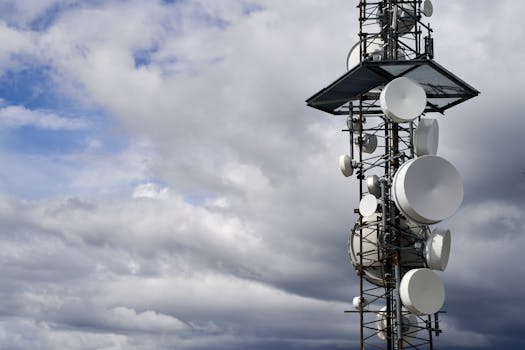
Even before discussing health outcomes, exposure patterns matter because they determine what tissues receive energy and for how long.
RF tends to be distance-sensitive
RF exposure generally decreases with distance from the source. A phone held against the ear produces a different exposure profile than a phone in a pocket, and both differ from a router across a room. RF devices also have transmission periods—exposure varies with call activity, data transfer, and signal conditions.
ELF is often proximity and wiring-related
ELF magnetic fields can be higher near wiring carrying current, especially where current is high or conductors are close together. Because many people spend long periods at home, ELF exposure can become a “background” issue—especially near sleeping areas if there are cables, transformers, or high-current appliances nearby.
Magnetic fields can be localized or widespread depending on the source
Static magnetic fields from magnets are typically localized, while magnetic fields from power systems can extend through building materials and air. Time-varying magnetic fields from electrical infrastructure may be present across larger areas, depending on grid configuration and building wiring.
What research suggests about health mechanisms (and what remains uncertain)
It’s important to separate:
- Established mechanisms (for example, RF heating)
- Observed biological effects at various exposures (which may or may not translate to meaningful health outcomes)
- Long-term epidemiology (which can be complicated by exposure misclassification)
Below is a cautious, educational overview of commonly discussed mechanistic themes.
RF: thermal effects are well characterized
At higher RF power levels, tissue heating is a clear and measurable effect. That is why safety guidance often uses limits designed to prevent excessive heating. Below those levels, researchers investigate non-thermal possibilities such as changes in oxidative stress, cell signaling, or neuronal activity. While many studies exist, consensus on non-thermal health outcomes is not straightforward, and exposure measurement remains a major challenge.
ELF: induced currents and oxidative stress hypotheses
For ELF, the dominant physical interaction is induced currents from time-varying magnetic fields. Researchers then examine whether those currents could influence biological processes—such as calcium signaling, gene expression, or oxidative stress. Epidemiological studies have explored associations with outcomes like childhood leukemia, but results are mixed and causality remains difficult to establish. Some studies suggest possible links at specific exposure ranges, while others find no consistent pattern.
Static magnetic fields: less evidence for direct harm at typical levels
Static magnetic fields are already present in many environments. At levels common in everyday life, evidence for adverse health outcomes is limited. However, strong static fields and rapidly changing gradients (as in MRI) have specific safety considerations, and those conditions are not comparable to typical home or office environments.
Practical ways to reduce exposure without overcorrecting
Exposure reduction doesn’t have to be extreme to be meaningful. The most effective strategies generally follow physical principles: reduce proximity for RF, reduce sustained proximity to wiring for ELF, and manage time near strong localized sources for magnetic fields.
RF practical steps: increase distance and reduce close-range time
Consider these evidence-consistent approaches:
- Use speakerphone or wired/wireless headsets to reduce the phone’s close proximity to the head and body.
- Keep the phone off-body when possible (for example, in a bag or backpack) rather than in close contact during long periods.
- Avoid prolonged active use when signal is weak. Poor signal can increase transmission demands.
- Position routers thoughtfully: placing a Wi-Fi router farther from where people sleep or sit for long periods can reduce cumulative exposure.
- Check microwave oven seals and avoid using a damaged appliance.
These actions focus on reducing the highest-exposure scenarios rather than trying to eliminate all RF everywhere.
ELF practical steps: manage wiring proximity and sleep placement
For ELF fields, the goal is often to reduce long-duration exposure near sources of current:
- Identify high-current devices (for example, heavy-duty power supplies, transformers, or areas with dense wiring) and increase distance where feasible.
- Reconsider where you place your bed if there are long runs of wiring behind the headboard or near electrical panels.
- Unplug or reduce time near specific appliances when you can do so safely and practically.
- Route cables away from sleeping areas during renovations, where possible.
- Use professional wiring practices: properly installed wiring reduces stray currents and avoids unnecessary hazards.
Because ELF exposure can be tied to building wiring, even small changes in placement can meaningfully reduce time-weighted exposure.
Magnetic field practical steps: treat strong localized sources as “time and distance” issues
For static or localized magnetic fields:
- Keep strong magnets away from frequent resting areas (for example, don’t place strong magnet assemblies near a desk chair where you sit for hours).
- Manage time near industrial or hobby equipment that uses magnets or generates strong fields.
- Follow safety guidance for MRI environments if relevant—medical magnetic safety is a specialized topic.
Measuring EMF exposure: what to know before trusting any number
People sometimes buy meters or rely on readings from devices, but measurement can be tricky. EMF exposure is not only about the field strength; it’s also about frequency content, distance, orientation, and how the meter is calibrated.
RF meters and common pitfalls
RF meters may report power density, field strength, or derived metrics depending on sensor type. Pitfalls include:
- Frequency limitations: Some meters cover only certain bands.
- Orientation sensitivity: Antennas and sensors can respond differently depending on polarization.
- Duty cycle variability: Readings may fluctuate with device activity.
- Local hotspots: A momentary reading can be misleading compared with time-weighted exposure.
ELF meters and wiring-related complexity
ELF measurements often require understanding whether you’re measuring magnetic field strength, electric field strength, or both. Readings can depend on:
- Whether you’re measuring near a conductor versus farther away
- Load current (appliances change current draw)
- Harmonics and local power system characteristics
Where “relevant products” can help—without turning into a shopping exercise
It can be useful to mention measurement tools in a neutral way. For example, some people use RF exposure meters designed for broad-band monitoring or ELF meters for field strength checks. The key is to choose tools that match the frequency range and measurement type you care about, and to interpret results cautiously—especially if you’re comparing different rooms or different times of day.
Rather than treating a single reading as a definitive health indicator, it’s more practical to use measurements to guide relative changes (for example, whether moving a router or changing a bed location reduces the reading).
Common misconceptions about EMF exposure
Misunderstandings can lead to either unnecessary fear or missed opportunities for sensible risk reduction. Here are a few recurring themes:
- “EMF is the same everywhere.” It isn’t. RF fields are often highly distance-dependent; ELF fields can be localized around wiring and current paths.
- “If you can’t see it, it’s automatically dangerous.” EMF includes many benign sources. Health relevance depends on field type, intensity, duration, and biological interaction.
- “One meter reading equals health risk.” Exposure metrics do not translate directly into individual health outcomes.
- “Shielding always solves the problem.” Shielding can help in some RF scenarios, but it can be counterproductive or impractical for broad living spaces, and it doesn’t address time-based exposure patterns.
Prevention guidance: a balanced approach for everyday settings
A practical prevention mindset focuses on reducing the highest exposures with minimal disruption. The goal is to make informed adjustments, not to eliminate all fields.
A simple, realistic strategy for RF
- Prioritize reducing close-range, prolonged exposure to devices that transmit actively.
- Use distance (speakerphone, keeping phones off the body during long periods) as your first lever.
- Reduce exposure around sleeping areas by thoughtful placement of routers and access points.
A simple, realistic strategy for ELF
- Consider where you sleep relative to wiring and electrical panels.
- Reduce time near high-current appliances when feasible.
- During renovations, plan cable routing and placement to minimize proximity to long-duration resting areas.
A simple, realistic strategy for magnetic fields
- Manage strong localized sources using time and distance.
- Follow specialized safety rules in medical imaging environments.
Summary: choosing the right mental model for EMF exposure
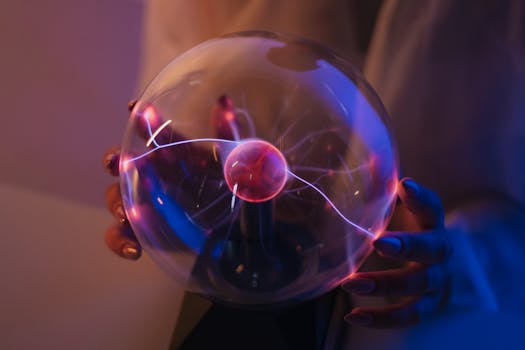
The phrase EMF exposure RF vs ELF vs magnetic fields matters because these categories reflect different physical properties and different interaction pathways in the body. RF exposure is most influenced by proximity and transmission activity, and the best-established mechanism involves thermal effects at higher power levels. ELF exposure is tied to electrical infrastructure and induced currents from time-varying magnetic fields, with ongoing research on long-term health implications. Magnetic fields can be static or time-varying; the biological relevance depends on whether the field changes over time and how strong it is.
For most people, the most practical approach is to reduce the highest-exposure scenarios: increase distance for RF, reduce long-duration proximity to wiring for ELF, and manage strong localized magnetic sources by time and placement. With a measured, evidence-based strategy, you can address concerns without turning everyday technology into a constant source of stress.
23.04.2026. 15:13